Pagosa Springs Business Report 1st Half 2012

Head Count Up- Bag Count Down!

We are well into the summer tourist season, past the Memorial Day and July 4th holidays. The first half of 2012 is now in our rear view mirror. The local economy has produced mixed results thus far, with some improvements in sales tax and lodging tax receipts and a slight increase in reported employment figures. In informal discussions with Main Street merchants, several have commented that the head count is up but the bag count is down, indicating that perhaps we are seeing an increase in the number of visitors, but their spending is restrained. Given the choppy and fragile economy, cautious spending behavior should be expected. This is likely to be the case until real growth in non-government employment improves consumer confidence.

Fortunately, some of our visitors and vacation home owners have decided the present real estate buying opportunities are too good to pass up. With savings accounts paying less than 1%, bond market returns generally disappointing and mixed results from the stock market, some investors have chosen to place a portion of their funds in real estate here in Southwest Colorado. In many cases, buyers are acquiring improved properties far below replacement cost, and commercial land and buildings at a fraction of where prices were just a few years back. Some investors are purchasing lender-owned properties, others are purchasing from private parties exiting the market with a substantial penalty rather than waiting for conditions to improve.

The Risk Takers are the first to recognize and capitalize on opportunities before the greater number of investors and consumers confirm the positive momentum of the market. They scoop up properties early while the crowds are still on the sidelines. They require and are rewarded with greater returns on their investments.  More
cautious investors trade greater returns for lower risk, each party establishing the risk-return ratio they are comfortable with. Both are essential to the market, and each complements the other in a recovering economy.

For those with the necessary level of risk tolerance and some discretionary investment cash, there are substantial opportunities for growth and profit within the present real estate market here in Pagosa Springs as well as Durango, South Fork and Creede. If these opportunities interest you, please give me a call or drop me an email.

Pagosa Real Estate Summary

It is interesting to hear the different opinions and feelings of where things are in the local real estate world. Often opinions are based on the local rumor mill and a few isolated and invalid samples from the total market activity. In this report, the facts are presented. The Total Closed Sales Volume for “All Classes” of real estate for the first half of 2012 increased 4.3% over the first half of last year. Closed Sales for the first half of 2012 totaled $41,970,380 as compared to $40,248,597 for the first six months of 2011, an increase of 4.3%. The total number of properties sold was
228 versus 194, an increase of 17.5%.

The Median and Average prices for “All Classes” of real estate have declined when compared to the figures reported for the first half of 2011. The market reported more units sold, and more total dollar volume, but declining prices. The average and median sales prices were down 11.3% and 3.5% respectively. “All Classes” includes single-family detached, multi-family, manufactured homes, building lots, land, ranches, farms commercial, etc. So, for the broad measurement, sales were up, but prices were down.

The current pattern is somewhat expected as the market is clearing out distress properties and bank-owned real estate ahead of firming up values and returning to a more sustainable rate of appreciation, in line with normal supply and demand components. The speculative home building portion of our local real estate market has effectively evaporated during the last four years. The supply side of the housing equation has not increased during the downturn, and this factor will have a more significant and positive impact on pricing when the market enters a stronger recovery phase.

Home Prices, Sales and Inventory Levels

Sales of Single Family Detached Homes are down for the first six months of 2012 as measured to the first half of 2011. This category of real estate comprises approximately 70% of the total dollar volume of real estate transactions within the county, certainly the most significant benchmark to monitor.

Closed Sales totaled $30,028,674 versus $36,190,345 for the first half of last year, a decline of 17%. The number of single family homes sold during the first half of 2012 was 113, as compared to 115 for the first half of 2011. A closer look at the numbers also shows the Average and Median prices for single family homes have declined as compared to the first six months of 2011. During the first half of last year there was one sale that skewed the figures slightly upward. That was a sale reported at $3,125,000. By removing that sale from the total and also removing the highest reported sale for the first half of 2012, the total Closed Sales Volume is still down over 13%.

Closed Sales 1st Half of 2012 & Supply of Homes by Price

$150,000- $250,000- 37 sales, 117 active listings, a
19 month supply.

$250,000- $500,000- 35 sales, 160 active listings, a
27.4 month supply.

$500,000- $750,000- 8 sales, 58 active listings, a
43.5 month supply.

$750,000- $1,000,000- No sales reported for
the first half of 2012 with 31 active listings.

$1,000,000- $1,250,000- 2 sales, 9 active listings,
a 27 month supply.

$1,250,000- $2,000,000- 1 sale, 29 active listings, a
174 month supply.

$2,000,000+ No sales reported for the first
half of 2012 with 15 active listings.

As the above figures show, some price ranges are significantly more over-supplied than others. For homes priced above $1.25 million there is a huge surplus of inventory. Sales in the upper price range often compete with new construction, where a very affluent client will prefer to have a home built to their specific plans on land of their choosing rather than acquire another owner’s dream home, even when the cost differential is quite substantial. They choose this route because they can.

This is still a strong Buyer’s market as the transaction data conclusively shows. We continue to see an increasing number of Buyers from Texas and fewer Buyers from California. The Arizona housing market is improving, as is the employment picture there, so we may see more folks returning to Southwest Colorado from that state in the months ahead.

If you would like additional details on the local real estate market or have questions about anything presented in this report, drop me an email at MikeHeraty@frontier.net, call me at 970 264-7000, or drop by our office- Pagosa Source Real Estate Advisors at 286 Pagosa Street, Pagosa Springs, Colorado.

Note: Data presented was obtained from CREN MLS and internal real estate database records. Home Sales and Inventory figures exclude manufactured homes, condos, townhomes, duplexes and timeshare units. Contact Pagosa Source Real Estate Advisors for additional information.


Posted in Archuleta County, Colorado Landowners, Housing Recovery, Pagosa Real Estate, Pagosa Springs | Comments Off on Pagosa Springs Business Report 1st Half 2012

WHO OWNS PAGOSA?

With the current controversy swirling around Wal-Mart’s plan to build a store here in Pagosa Springs, some of the opinions stated in Letters to the Editor as well as the public forums have centered on “ownership” of Pagosa Springs. Some residents whose families have lived here for several generations claim the area belongs to them. Some of these residents have shared their discomfort with more recent arrivals that they perceive as wanting to change Pagosa to their vision of an ideal small town. Others that have lived here only ten years or so claim their “ownership” is more important than others and that their wisdom regarding what a future Pagosa should look like is more enlightened than anyone else’s view. It has been interesting to observe the various opinions and perspectives. I am sorry to say that much of this has become somewhat divisive, which is not good.

Because I do a lot of research of county records to identify and stay ahead of the changes in our local economy, I thought it would be interesting to look into who really “owns’ Pagosa, at least as far as its real estate is concerned.

Did you know that less than half the property on our tax rolls is owned by “Locals”? According to the County Assessor, there are 18,952 properties here in Archuleta County.   58% of the properties in our county are owned by “non-residents”.  These “non-residents” make up a large percentage of the total property tax revenue collected by Archuleta County to fund the goods and services provided to residents of our community. County records indicate only 8,032 of the properties on the assessor’s rolls are owned by people that reside in Archuleta County. A total of 10,418 or 55% of our county’s properties are owned by residents of the State of Colorado. 264 of the properties are owned by folks living in Durango, with another 107 owned by residents of Denver and 79 properties owned by residents of Colorado Springs.

Texas continues to be a big state for Pagosa Area property owners. As of the start of this year there were 2,100 properties owned by residents of Texas, representing about 11% of the properties in the County. I know from our internal records that 2010 and 2011 saw a large number of Texans acquiring property here for the first time. Their economy has remained relatively strong through the recession and they have not experienced the real estate melt-down following years of high levels of appreciation that impacted so many other states.

Nearly an equal number of properties are owned by residents of California and New Mexico, 1,243 and 1,246 respectively. This ratio has changed from ten years ago when New Mexico had significantly more Archuleta County property owners than California. Arizona residents own 949 properties here in Archuleta County. The breakdown of ownership states after Texas, New Mexico, California and Arizona is pretty spread out, except for the state of Florida. Presently there are 555 properties owned by residents of the State of Florida. Oklahoma is the next concentration of ownership with 336 properties.

As I looked over the ownership records I realized that Pagosa belongs to lots of people from many different places, with various backgrounds, and a variety of different viewpoints. Much like America as a whole, Archuleta County represents a variety of stakeholders, each important and significant in their own way. From my experience, each adds something to our community, and each is entitled to a voice in how we shape our future.

Presently, the political system and voting structure within the state, county and town determine how much of a voice a property owner and/or resident may have on many matters. Still, even those stakeholders that presently do not have a vote do have a voice. There are members of our Town and County leadership and government that are interested in the opinions of those that have made a financial investment in the area though they do not presently have a vote.

In my opinion,  “Outsiders” bring a perspective to the residents that can be beneficial. Occasionally the residents of the forest can’t see their trees are diseased or in need of a different forest management plan. “Outsiders” can bring a viewpoint not infected by old history or prejudices that can impair the vision needed to move towards a successful future. Instead of the “Us vs. Them” perspective, it would be more productive to think how we can all work together to address the challenges facing our community.

Check the links below for interesting articles on America’s largest landowner: America’s Largest Landowner

For more information on “ownership” of Archuleta County, or any real estate related matter, give me a call at 970 264-7000, or drop me an email at:

MikeHeraty@frontier.net

Be sure to visit our website at www.pagosasource.com

Posted in Archuleta County, Colorado Landowners, Pagosa Springs, Property Rights, Wal Mart | Tagged , , , | 1 Comment

HORMONES TO DRIVE HOUSING RECOVERY!

Those are not my words, but those of the Oracle of Omaha, Warren Buffett, one of the most successful investors in the world. In his annual Letter to Shareholders released at the end of last month he said he had been “dead wrong” a year earlier when he predicted a rebound in U.S. home prices would begin within a year. Still, this year he is again betting the U.S. housing market recovery will get underway for a different reason: hormones.


According to Mr. Buffett, young people have stayed at home, moving in with parents and in-laws rather than setting up their own households.  Housing will come back – you can be sure of that… Every day, we are creating more households than housing units. People may postpone hitching up during uncertain times, but eventually hormones take over,” Buffett wrote in the letter to shareholders in his investment company Berkshire Hathaway. “And while ‘doubling-up’ may be the initial reaction of some during a recession, living with in-laws can quickly lose its allure.”

In an appearance on CNBC on February 27th he added “houses are another attractive investment at current prices.” He went on to say he might buy a couple hundred thousand homes if only he could figure out a way to manage them effectively. He said he isn’t very handy. “Single-family homes are really cheap now too,” Buffett said.

When you look at the holdings within Berkshire Hathaway you will note among the 80 subsidiaries in the portfolio are several companies that are tied directly to the housing market. Among them are Acme Brick, Clayton Homes and Shaw Carpet. In 2006 those companies contributed $1.8 billion of pretax profits to Berkshire while last year their contribution was only $513 million. Buffett certainly has reason to want the housing recovery to gain strength.

Any other words of wisdom from Mr. Buffett?

Further into the interview-

According to the world’s most successful investor, the reason buying a house and taking a low interest rate mortgage makes perfect sense is simpleit’s a leveraged way of owning a very cheap asset now. That’s as attractive an investment as you can make.” 

So, what holds so many Americans back from taking the advice of Mr. Buffett? The same thing that paralyzes so many investors—fear. Overcoming that fear and moving forward against the cautious masses is one of the characteristics that have made Warren Buffett the world’s most successful investor. We can learn much from his history.

If you would like information on any real estate related matter here in Southwest Colorado, please give me a call at 970 264-7000. You can also drop me a line at:  MikeHeraty@frontier.net.

Also, be sure to visit our website at www.pagosasource.com


Posted in Berkshire Hathaway, Housing Recovery, Pagosa Real Estate, Warren Buffett | Comments Off on HORMONES TO DRIVE HOUSING RECOVERY!

Alamos, Sonora, Mexico and Pagosa Springs

This blog entry will not have much to do with real estate. If you want or need specific real estate data or assistance, drop me an email at MikeHeraty@frontier.net, or call me at 970 264-7000.

ALAMOS, SONORA, MEXICO

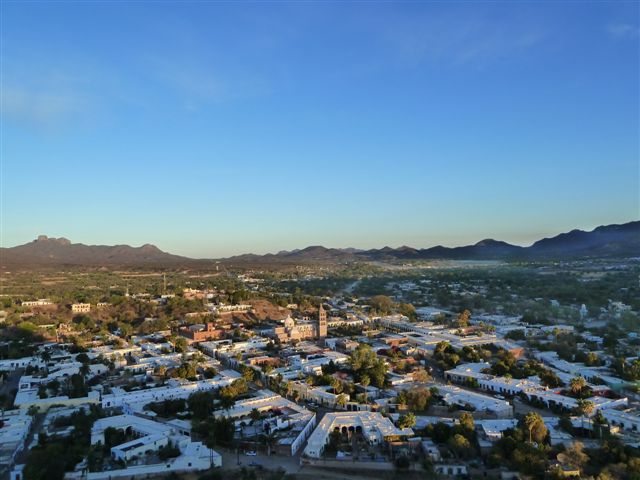
I recently returned from a trip to northern Mexico at the edge of the Sierra Madres to the town of Alamos within the State of Sonora. Interestingly, the town is about the same size as Pagosa Springs. It is a Spanish Colonial Mining Town founded in 1681 following the discovery of silver in the area. Because of the great wealth created from nearby silver mines, scores of large colonial Spanish mansions were built in the town. Many were destroyed in the early 1900’s before Americans began to rediscover the area in the 1940’s. A number of the families living in Alamos can trace their heritage back to first settlers that came to work the mines.  Presently there are a number of Americans that maintain homes there for the winter months, and a few that live there all year, though I have found the summer heat to be quite intense. Like Pagosa Springs, Alamos has struggled during the recession to continue to attract tourists that are willing to spend money locally. Unlike Pagosa Springs, they have also had to deal with all the negative press relating to the drug wars that continue to plague many parts of the country. Though there has not been any drug violence in Alamos (it is far enough off the cocaine highway) the number of visitors from the U.S. has declined sharply and the town has seen a significant reduction in U.S. tourist dollars flowing into its coffers. Interestingly, those funds have been replaced, by and large by visitors from within Mexico. Alamos has been the location for the filming of a Novella (Mexican Soap Opera) which has been tremendously successful. They have been in town for the summer months, which historically have been the months most hotels see few visitors. In December of last year they filmed a full feature movie in the area. When it is released later this year into the Mexican market, Alamos expects to see more visitors as the movie includes some interesting history of the area.

The residents, business owners and town employees and leaders work hard to keep their city clean, safe and friendly. They do a good job of promoting Alamos with a series of events scheduled throughout the year. While I was there last month the 28th Annual Festival Alfonso Ortiz Tirado was underway. This is a music and art festival named after a famous opera singer and doctor that was born in Alamos in 1893.

This year performers came from Puerto Rico, Brazil, Cuba, Costa Rica and other Central and South American countries. The following link will take you to the Festival Program Guide- get ready to polish up on your Spanish:  Alamos Festival         The event was attended by loads of Mexican nationals, many from within the region, but many from as far away at Mexico City and Oaxaca. About a third of those attending the festival were foreigners, from Central America, Europe, South America and Gringos like myself from the U.S.  Everything was very well organized, events began and ended on schedule and provided everyone with a fabulous variety of musical performances. Thursday evening the group Puerto Rican Power played for the crowd and had everyone on their feet dancing the salsa:  Friday evening the group Opera Prima Rock performed a two hour tribute to the music of Queen. I was amazed how popular their music was and how many members of the audience knew all the lyrics. The group had everyone on their feet for the encore “We Are the Champions”.


OPERA PRIMA ROCK 

Saturday evening the Italian Tenor Alessandro Safina performed. In 2007 he recorded a duet with British Soprano Sarah Brightman for her Symphony album and joined her on her Symphony World Tour for 2008 and 2009. His vocals and his orchestra were fabulous. Following his performance,  Callejoneada con la Estudiantina Dr. Alfonso Ortiz Tirado completed the music celebration with all of the musical artists dressed in 17th century Spanish costumes, parading through the streets and alleys of Alamos playing traditional songs and telling stories. This went on until the wee hours of the morning. In all, the experience was wonderful.

Anyway, what I found most interesting is how well attended the Festival was. You had to travel 30 miles west of Alamos to the city of Navajoa to find lodging if you had not made a reservation at least two months earlier. The Festival has been sponsored and coordinated by a group of stakeholders including the Town of Alamos and surrounding communities, the State of Sonora the National Institute of Fine Arts, with commercial financial support from Coca Cola, Corona, and Telmex. This is a festival I would highly recommend to any music and culture lover. The people are warm and friendly, lodging is great within Alamos if you plan ahead. My two favorite lodging facilities in Alamos happen to be owned by Americans: Hacienda de los Santos and Hotel Colonial.

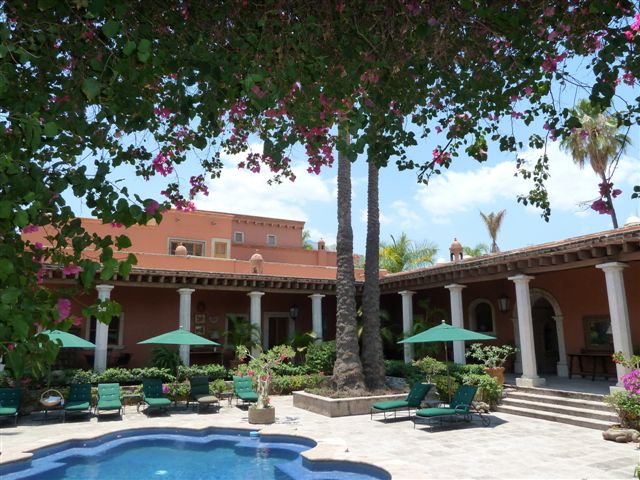
 Hacienda de los Santos, one of three pools.

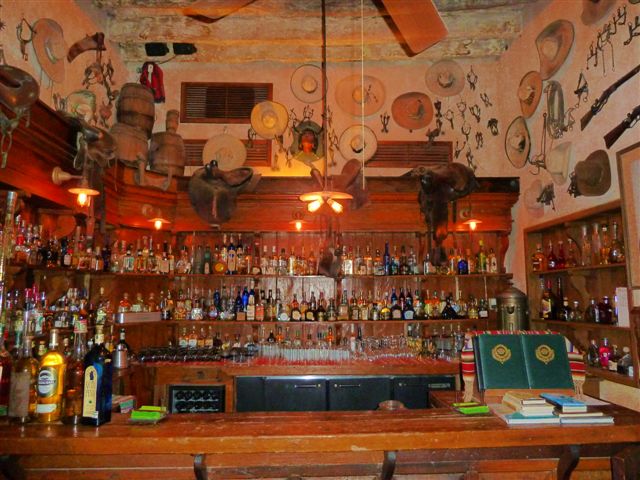
 Both of these hotels are exceptional. Within HDLS is the Poncho Villa Cantina, where Poncho Villa stood after entering the town. If you are a Tequilla drinker, you will find over 500 different bottles of the spirit within the bar. If you can’t find one you like, you’d better think about changing drinks!


 Pancho Villa Tequilla Bar at Hacienda de los Santos

Hotel Colonial, Alamos. Janet Anderson, Proprietor.

The restaurants in Alamos are very good and very economical.  I love the food at Hacienda and Las Palmeras is a great spot for lunch or a casual dinner. Terisita’s Panaderia y Bistro is my favorite for a cappuccino and breakfast pastry, a great place to start the day and check email with their WiFi connection.

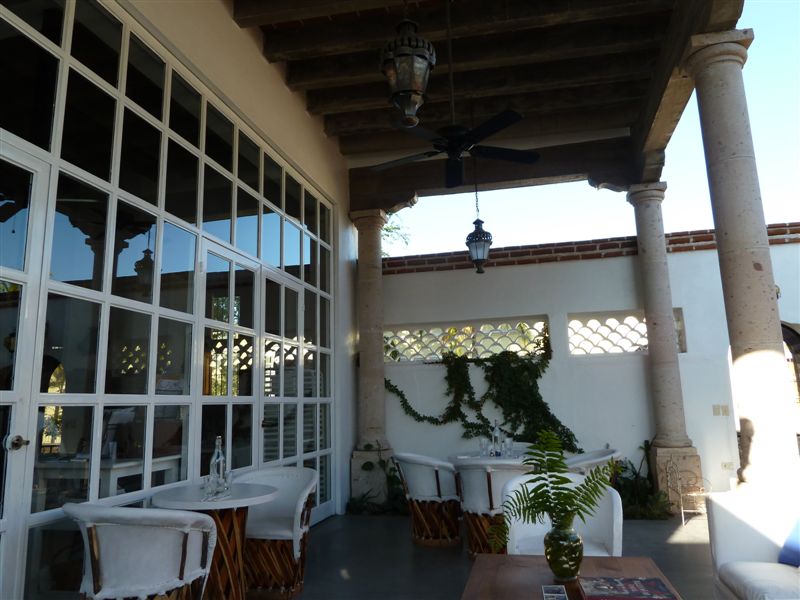
 Outside Seating at Terisita’s Panaderia Y Bistro


You can reach the town of Alamos by driving a little over one hour south from Ciudad Obregon, where you can catch a flight from Phoenix on Aero Mexico with a connection in Hermosillo. Alternatively, if you don’t mind a longer and much more economical journey, you can take a first class luxury bus with on board video sets and Wi-Fi from Phoenix or Tucson. While in town I did check out the local real estate scene. Not much had changed from my previous visit in June of last year. A few properties are moving, but very slowly and at prices well below the peak of 2007. Few Americans are buying and many more are trying to sell. Very few Sellers have shown a willingness to greatly reduce their asking prices. Instead, they seem determined to remain patient, a concept that seems more abundant within Mexico.  The decline in buying interest from Americans has, to some extent been partially offset by a renewed interest from Mexican nationals.  It was also interesting to see the increase in Canadians in Alamos.  Alamos Gold of Toronto, Canada owns a huge gold mining and milling operation just west of Alamos which is targeting production in excess of 150,000 ounces of gold for the year, generating gross revenues of over $200 million. Perhaps this investment in the area will create more visitors to Alamos from our northern neighbor. I initiated a discussion with a resident American of creating a Sister City relationship with Pagosa Springs. The Town of Alamos currently has a Sister City relationship with an Arizona community, but nothing with any Colorado towns. It might be a mutually beneficial relationship, given the similarities of the towns. If you think you would enjoy the wonderfully interesting culture of Old Mexico, I highly recommend you consider a visit to Alamos, and I would suggest visiting during the Festival Alfonso Ortiz Tirado in January. Be sure to book your trip early in order to obtain good local lodging.

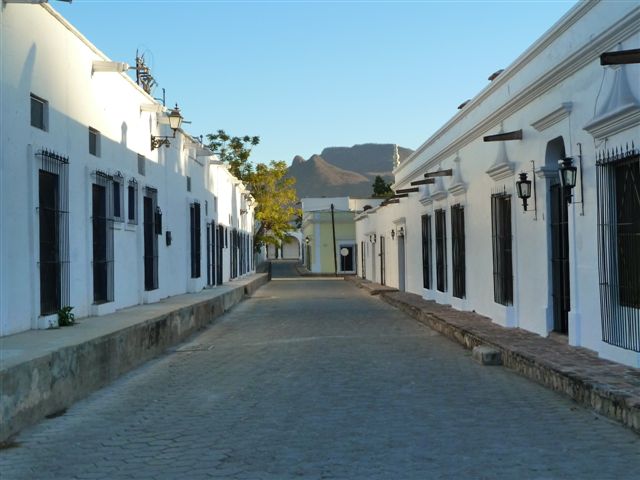
Quite Street in Alamos at 6:30 a.m.A Quiet Street Scene in Alamos at 6:30 a.m. the day after the end of The Festival.


Posted in Pagosa Real Estate | Tagged , , , , | Comments Off on Alamos, Sonora, Mexico and Pagosa Springs

PAGOSA SPRINGS AND ALBUQUERQUE–“What Up With That?”

Is the Albuquerque Real Estate Market Important to Pagosa Springs?

Good question. Yes, actually, the Albuquerque economy is important to Pagosa Springs for several reasons. Historically, a large number of second home owners came to our area from Albuquerque. Today we still have a good number from Albuquerque and the Santa Fe area. Albuquerque is our closest neighbor of any real size and it has weathered the current recession relatively well. It continues to benefit from defense spending with several military installations as well as the large number of folks employed at Sandia Labs. Also, on the West Side of Albuquerque, Intel has had a major presence with several expansions and increases in employment.

So, our neighbor to the south is important to us and we benefit when their economy is doing well. I recently received a report on their real estate market from a broker I work with there. The numbers are encouraging. Though the average selling price for single family homes is down slightly, the number of transactions is up and the total dollar volume is up. Closings are up over 13% from the prior year. Also, the amount of inventory on the market in Albuquerque has declined by nearly 22% over last year. The Absorption Rate now indicates that Albuquerque has a 7 month supply, down from a 10 month supply in July of last year. These figures confirm their real estate market is improving and that will be good for Pagosa Springs. If our community, through the Town Tourism Committee, the Chamber of Commerce, the Downtown Merchants Association, Board of Realtors and Builders Association, can come up with a creative and effective marketing campaign, perhaps we can attract more affluent visitors from Albuquerque.

For many years the timeshare operators pulled visitors up from New Mexico with free golf, dinners and balloon rides in exchange for sitting though a sales presentation. Perhaps we can attract more Albuquerque visitors by communicating the unique qualities and experiences Pagosa Springs has to offer. I have confidence in the marketing creativity members of our community can come up with.

For information on real estate in the Pagosa Springs or Durango area, be sure to visit our web site- www.pagosasource.com. Also, if you would like to discuss your real estate concerns or goals, please give me a call at 970 264-7000, or, drop me an email at: MikeHeraty@frontier.net

Thanks,

Mike

Posted in Pagosa Real Estate | Comments Off on PAGOSA SPRINGS AND ALBUQUERQUE–“What Up With That?”

First Glimpse at 2012 and Some Insights On Bank-Owned Properties

Initial results recorded in our local MLS indicate we are ahead of last year in the first three week of the New Year. Total closed sales volume for the first three weeks was $3,570,000 as compared to $1,928,700 for the first three weeks of 2011. There were 13 closings for 2012 compared to 9 closings for the first 21 days of last year. The initial closings for 2012 included one sale at $1,350,000 with the highest dollar sale recorded in early 2011 of $454,500. Even adjusting for the effect of the high dollar closing, the figures clearly indicate we are starting 2012 with better results than the beginning of last year.

As discussed in my earlier article on the Year End Real Estate Results posted January 2nd, challenges remain in our local economy that will continue to impact our ability to experience any sort of sustained economic recovery. Still, the early results would indicate we are off to a start that confirms a slowly improving set of real estate market statistics.

Recently I met with representatives of two of our regional banks to discuss the values and marketing of land inventory they have acquired through foreclosure. During the boom years of 2002-2007, the market absorbed land inventory of all types at a fast pace while prices appreciated beyond all expectations. It seemed back then that an investor or developer could acquire land at the then market price, wait a short period of time and resell it at a substantial profit. For the developer, by getting zoning and entitlements for future development, value could be increased exponentially.  It was within this environment that local and regional banks began to provide financing to both land developers and investors here in SW Colorado. Appraisals confirmed values by the number of Comparable Sales that were closing and by discounting the projected future cash flows that the developers projected within their business plan. Back then it was rare for a lender to require a Feasibility Study to validate the assumptions made by the borrower-developer regarding projected selling prices, market share and absorption rates. In many cases the lenders knew they could package the loans with others into collaterized mortgage ‘ (“CMO’s”) and pass the future risk on to other investors. In some cases the lenders retained a small percentage of the loan as well as the loan servicing. Additionally, they often participated the loan among other banks, and sometimes those sales or participations had buy-back provisions. In other cases the regional banks simply held the debt as portfolio loans and accepted all the risk. So long as all went well- no worries. Of course as we all have the clear vision now provided by looking in the rear view mirror, things began to unravel in the real estate world, and all did not go well.

Land inventory is presently the most over-supplied real estate category within our market. Commercial land is at the top of the list because the demand has dropped so significantly that there are few sales actually closing. This makes valuing commercial land very difficult. My objective in valuing a property for an owner is different than an appraiser. For my Sellers, typically the objective is to move the property at the best possible price, within an acceptable timeframe. In addition to reviewing the historical data, I look more closely at the current and projected future market conditions to estimate the ratio of supply and demand. It is important to know many similar properties have sold in the prior 6-12 months, as well as how many are presently on the market. I further review the properties for sale to determine how many are lender-owned, or likely to become lender-owned. Our local MLS will not provide all the details needed to properly assess current market value. A close look at the data within the County Recorder’s Office, discussions with local lenders and a review of our in-house foreclosure database provides the details which help more clearly define the market forces.

Without a sufficient number of sales closed during the prior 6-12 month period, one has to look further back in time. For our area, this still doesn’t provide much useful data, even going back another 12 months. Ultimately when end-user demand has nearly evaporated from the current market, the value of land drops to that level needed to attract purely speculative investors. These “Bottom Feeders” are the brave souls that will wade back into the swamp before it has been drained and all the alligators have exited. These are the risk takers that analyze the market carefully and decide to step in ahead the point in time the investing public sees a solid real estate recovery trend. In return for bearing a very high level of risk, they require a very high potential rate of return. They will only buy at the price they feel minimizes further downside risk. They typically diversify their investments knowing some will do really well, but some will not. In the technology world, these risk takers are known as Venture Capitalists. The name is probably equally appropriate for the high risk, early phase real estate investors.

For the banks that now own an increasing share of the vacant commercial land within our area, they have some difficult choices. In order to liquidate these assets they will likely be forced to accept considerably below what the property was last appraised at. In some instances they will have to sell below what they have written the value down to. If they choose to hold the asset waiting for the market to improve, they must bear the cost of property taxes and P.O.A. dues and be comfortable with the possibility of more downside risk. Further complicating the decision are the requirements of the bank examiners as well as their auditing firm. Taking a loss further impairs their capital and reduces their lending capacity.

Though in today’s economy a bank’s cost of capital is extremely low (think how low a rate your savings account earns today) banks do not want their lending constrained. They need to be able to make good loans when the demand is present. In order to do so, they have to maintain a certain “capital ratio” or net-worth level that is mandated by the banking regulators. When they sustain loan losses in excess of the reserves they have set aside, their capital is reduced and they must either raise capital by selling stock or other assets they have unrealized gains in, or, reluctantly, they must reduce their lending activities and reduce their total assets.

At times it is difficult to understand the decisions banks make regarding the sale of their real estate. Unlike private investors, they have auditors, banking regulators as well as shareholders to answer to. In today’s challenging economy, with financial regulations changing continuously, they have their work cut out for them. Like all of us, our regional banks want things to improve sooner rather than later.

You will find a number of interesting articles discussing the tough choices facing many of our regional banks within this magazine:

http://www.mortgageservicingnews.com/    If you would like information on any property in Southwest Coloroado, be sure to check our website: http://www.pagosasource.com/


Posted in Pagosa Real Estate | Comments Off on First Glimpse at 2012 and Some Insights On Bank-Owned Properties

THANKFULLY WE HAVE GOOD SNOW AT WOLF CREEK SKI AREA


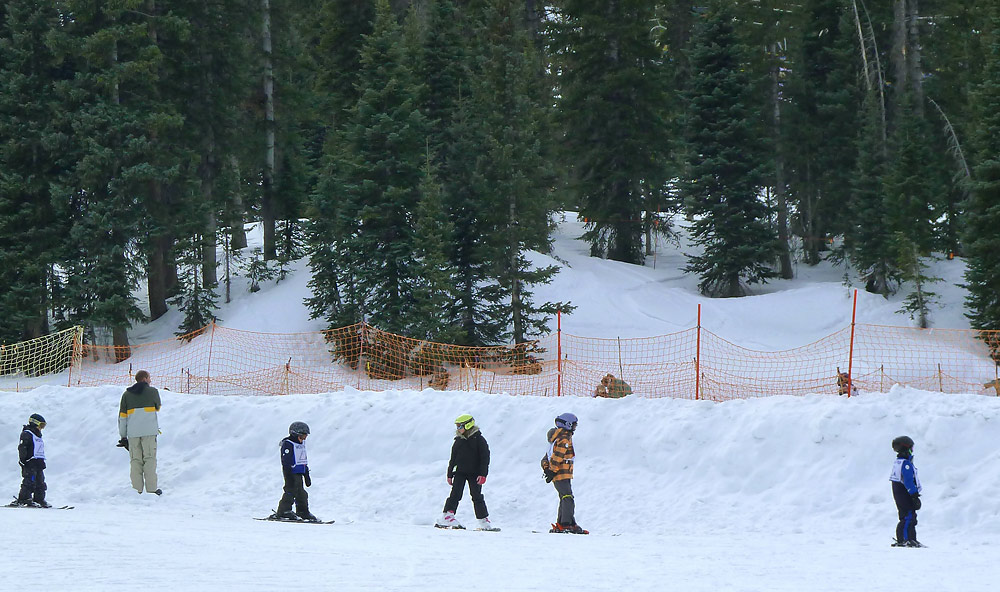
Though our Wolf Creek Ski Area has the best snow in Colorado, (or nearly anywhere in the Rockies) we do need some fresh powder. The Ski Area is doing a good job grooming the runs, but without some additional snow in the next 7-10 days, it may start to get a little thin and hard packed. For those of us that live here, this year’s snow has been a bit of a disappointment, except for the great conditions during the months of October and November. Normally our base would be another 12-36 inches deep by this time in January. Wolf Creek Ski Area saw it earliest opening day this year due to some great storms that dumped an abundance of snow and temperatures that stay low up on the mountain. While I was there last weekend I spoke to several skiers that were experiencing Wolf Creek for the first time. They usually skied in Summit County, at Keystone, Breckenridge or Copper Mountain. When they looked at the snow depth up there, they decided our area was the place to ski. I met skiers from Minneapolis, Omaha, Kansas City and Orange County, California. All were impressed with our Ski Area and high praises for the mountain grooming and the good food in the Main Lodge. Hopefully those visitors will tell others and we will see more new skiers later this year and beyond. On Sunday it was College Day and Wolf Creek Ski Area had a mountain full of college students taking advantage of good skiing conditions and cheap lift tickets. Everyone seemed to be enjoying their friends and the sunny day on the slopes. This week things have quieted down a bit with a few visitors still in town on semester break and extended Christmas vacations. The restaurant owners I have spoken to seemed pleased with the volume of business they did during the Christmas holidays. As the normal seasonal business cycles work here in Pagosa Springs, everyone now has to hunker down and wait for the influx of tourists and visitors during Spring Break. The early indications are that we should see numbers improved from last year. Much depends on our weather and the snow conditions at other resort areas in the Rockies. This is historically a slow time for real estate in SW Colorado. We typically get few Buyers during ski season. Some will look during the winter and return in the early summer to get serious about owning property here. We have seen some Buyer traffic, mostly focused on the best buys available within the available inventory. We have not seem many further price reductions this winter as normally Sellers settle to wait out the winter, hoping for better selling conditions in the spring and summer. So far, the number of new foreclosure filings looks to be improving. We will wait until the end of this month to see if the backlog we have been hearing rumors about materializes. If not, it may well be that we are in fact past the worst of the market correction and the likelihood of further price erosion may be very limited.  I recently viewed a chart of each of the 50 states which categorized them as to how many homes have negative equity. Colorado looked pretty good, especially when compared to AZ, CA, FL and NV. You can click the link below to the article: http://www.kcmblog.com/2012/01/06/negative-equity-state-by-state/  If you would like to view all of the properties available within our area, be sure to visit our website: www.pagosasource.com   If you have questions or comments, drop me a line by email: MikeHeraty@frontier.net  or give me a call at 970 264-7000. Thanks for taking the time to read this.  Mike

Posted in Pagosa Real Estate | Comments Off on THANKFULLY WE HAVE GOOD SNOW AT WOLF CREEK SKI AREA

2011 DATA SHOWS IMPROVING REAL ESTATE MARKET- Part Two

PART TWO:

 2011 REAL ESTATE MARKET SUMMARY 

Results for 2011 improved in most categories. 507 closings totaling $114 million in sales were recorded for the year. During 2010 there were 400 closings for a total of $87 million. The total number of transactions increased 27% during 2011. Total dollar volume was up 31% from the prior year. We saw an increase in the number of homes sold and a decline in the number of units on the market at year-end. The negative impact of foreclosure properties is beginning to lessen as well as the number of foreclosure notices filed declined from 231 to 157. The number of loan modifications recorded was only down slightly from last year, at 71. This is significantly below the 177 loan modifications recorded in 2007 at the beginning of the downturn. Land continues to experience weak demand and an oversupply of inventory.


Residential- All Types

For all residential property categories, (stick- built detached, condos, townhomes, duplexes, mobile and modular homes,) there were 329 units sold for the year, versus a total of 251units for 2010, an increase of 31%.

Total dollar volume for residential sales was up 24% over the prior year, ($82.8 million versus $66.8 million for 2010). Year- end inventory count for 2011 was reduced by 31.5%, with 400 Active Listings on 12/31/2011 as compared to 526 at the end of 2010.


Residential- Single Family Detached

A total of 252 single family homes (stick built) were sold during 2011, versus 206 units during 2010, an increase of 22.3%. Total dollar volume was $74.6 million for the year as compared to $61.5 million for 2010, an increase of 21.3%. At year-end the number of unsold homes remaining on the market declined by 27% over the prior year, (298 units vs. 378 units at the end of 2010).

Residential High-End

The upper-end of the residential market remains significantly over-supplied. There were 31 properties priced above $1 million remaining on the market at year-end.  During 2010 there were 3 sales recorded above the $1 million mark. For all of 2011 there were 8 residential sales recorded above $1 million, indicating we have about 46 month supply of high-end homes going into 2012.

Residential-Multi-Family

There were 40 condo/townhome sales closed during 2011, an increase of nearly 43% over the 28 sales recorded for 2010. The total dollar volume of $5.3 million for 2011 was up 36% for 2011 over 2010 total dollar volume of $3.9 million.

Commercial


 For 2011, the downtown properties formerly owned by David Brown made up the largest portion of the sales closing during the year.

As mentioned above, our firm handled the bulk sale of the BJM Property Portfolio to a Nevada company, as well as the breakup and remarketing of 22 of the 24 properties. Sold properties included the two acre site at the base of Reservoir Hill, the former Kleckner home and adjacent vacant land on 1st  Street, the three lots of the former Ampride site at the northeast corner of  Pagosa Street and 1st Street, the former Bolt property next to the Pinewood Inn, the Alley House Building (home to the Alley House Grill) and adjacent vacant tracts, the vacant sites approved for the Three Lanterns Boutique Hotel just east of Handcrafted Interiors, the Poma property next to the county courthouse, the San Juan Plaza, the Sielstad Building (new home to Pedal and Powder) and the two vacant tracts above the river on east of 6th Street.

For the year ended 12/31/2011 there was a total of 23 commercial property closings, with total dollar volume of $5.3 million, down 40% from $8.8 million in commercial property sales closed during 2010. There were a total of 23 commercial sales reported to the MLS for 2011 as compared to 21 reported in 2010.

During 2010, three major lodging properties changed hands. Pueblo Bank and Trust sold the San Juan Motel, listed at $1.9 million and selling for $1,275,000. The Pagosa Lodge, with a Listing Price of $4 million was sold for $2 million by the Nightingale family to Pagosa Lodging, LLC. Another noteworthy sale during 2010 was the Wolf Creek Run R.V. Park, developed by the late John E. and Phyllis Brown. It was sold for $1.2 million to MTTD, LLC of Eugene, Oregon. These three sales comprised $4.5 of the commercial sales total volume of $8.9 million closed during 2010. It is interesting to note that each of the sales involved financing provided by the Sellers, a sign of the continuing difficulty within the commercial lending environment.

Land

Land sales declined during 2011. Though the total number of parcels sold remained unchanged at 120, total dollar volume was down by 25% for the year, $7.3 million during 2011, as compared to $9.8 million in 2010. The inventory of land offerings at the end of 2011 increased from 871 to 936 Active Listings.

Land-35 Acre Tracts

For the year there were 9 sales recorded totaling $1.7 million. During 2010 there were 16 sales for a total of $3.7 million. At year end 91 listings remained on the market representing a 10 year supply.

Land-3-10 Acre Parcels

27 sales totaling $1.9 million were recorded for the year as compared to 22 sales totaling $2.5 million recorded during 2010. There were 183 parcels on the market at the end of the year, an 81 month supply.

Land- Small Lots (.15-2.99 Acre Home Sites)

The number of sales closed for the year remained unchanged from the prior year at 77 with $2.6 million in total sales. During 2010 sales totaled $2.7 million. 504 lots remained on the market at year-end. This represents a 78 month supply of home sites.

Conclusion

While it is true we are far from being out of the woods, the statistics indicate we are heading in a positive direction with a defined path out in front of us. A decline in available inventory, an increase in total sales, a slowdown in new foreclosures and change in ownership of a large number of downtown properties are all positive factors. In order for us to realize further improvements, we need more middle income Americans returning to our area and investing in our real estate. This requires a higher level of consumer confidence, which is today, largely a function of job creation and growth in household income. These factors will likely be slow in coming, regardless of the shape the national political landscape takes in the months ahead. In the meantime, as a community we can focus on harnessing more of the exceptional creative and intellectual capacity of our members to address the challenges that lie ahead.


If you have questions about any of the information presented, give me a call at 970 264-7000, or email me at:

MikeHeraty@frontier.net. You can access additional information within our website: www.pagosasource.com and on our blog site: www.southwestcoloradonews.com.


Thank you to all our clients and customers for your support during 2011.

Mike


Note: Information presented above was obtained for the CREN MLS for the Pagosa Springs Area Association of Realtors and internal data from Pagosa Source Real Estate Advisors. These sources are deemed reliable, but author does not guarantee the accuracy of the data. Some figures have been rounded.

cialis

Posted in Pagosa Real Estate | Comments Off on 2011 DATA SHOWS IMPROVING REAL ESTATE MARKET- Part Two

YEAR END FIGURES SHOW IMPROVING REAL ESTATE MARKET

PART ONE: 

Another year is gone and the results are in the book. 2011 was a better year for the local economy, at least by most measurements. Yes, there still were too many foreclosures and too many distress sales, and many of our local businesses have continued to struggle as visiting tourists have not loosened up their spending as much as needed. Still, we have improved from where things were, especially when we compare figures from 2008-2010 to 2011.


There remains an abundance of commercial vacancies in town. Our firm, Pagosa RealEstate Advisors successfully closed on sales of 22 different commercial properties within the downtown and East Village area, formerly owned by BootJack Management and related entities. Nearly every property was purchased by locals or buyers that have vacation homes or ranches here in the area. Plans are being studied for the development of some of these properties in the near term and we think that is good for the entire community. These sales represent a solid vote of confidence in the long term viability of our area. The purchasers were successful business owners or professionals with significant achievements in the business world. None were first time investors, purchasing to flip the properties for a for short term profit.

Much has changed since David Brown attempted to move development forward in the East Village of Pagosa Springs and the mood and cooperative spirit among the Town Council and Administrators has improved significantly. A more sensible “pro-business”, pro-job-growth” philosophy seems to be developing. Perhaps there are some genuine regrets for having kicked the community’s former gift horse in the mouth.

With a high real rate of unemployment and the lack of much new construction over the last several years, community leaders have had to take a different approach to managing the future of our area. No doubt there will be substantial challenges ahead for the Town and the County, but I sense a stronger willingness to roll up our sleeves and do the hard work required to build towards a more sustainable and vibrant future. There is and will continue to be more controversy, whether it is related to the Big Box Retailers, the development of Reservoir Hill, county road maintenance or school facilities. I choose to believe our exceptional community will come up with solutions beyond what others might expect who believe we are nothing more than “average”. I strongly disagree with the opinion stated in the Pagosa Sun December 29th Editorial titled “A New Year in an Average Place”  http://pagosasun.com/opinion.html   I look forward to our community proving Karl Isberg is wrong in his assessment of Pagosa and its stakeholders.

Market stats will be published on this site tomorrow, January 2nd.

Many thanks to all our clients and customers for their support during 2011.

Mike


Posted in Pagosa Real Estate | Comments Off on YEAR END FIGURES SHOW IMPROVING REAL ESTATE MARKET

WHO IS BENEFITTING FROM RECENT GAS WELL DRILLING?

Gas Well Drilling Site Off Trujillo Road Where San Juan Flows Into Navajo Reservoir

BIG GAS WELL DRILLING PLAY IN ARCULETA COUNTY

A few days back I took a long drive down Cat Creek Road. The last time I traveled more than five miles down this road was when I was showing the Candelaria Ranch to a client from Boston, about five years ago. Not much had changed along most of the route. There are still many thousands of acres of dry grazing lands, what isn’t now part of the Southern Ute Tribal lands is mostly owned by the Gallegos, Espinosa, Pacheco and Padilla families that have been in the area for many years. It is still an area that suffers from a lack of good developed water resources. The limited amount of surface water draining through the area won’t support much crop production, nor will it provide good livestock grazing. There are a few places along the way where the creeks provide enough flow for shallow wells and some irrigation, but not many.

Decades ago, much of the land was home to thousands of sheep, but the sheep industry began to decline significantly after World War II and into the 1950’s. The loss of labor from World War II, changes in consumer preferences as well as the repeal of the National Wool Act all contributed to a substantial reduction in the size of the sheep herds grazing lands here in Southwest Colorado and across America.  Today you are more likely to see large herds of elk and mule deer where once thousands of sheep grazed, watched over by descendants of the early Spanish settlers.

The scenery is still gorgeous and interesting; with large rock outcroppings, tall ridgelines covered with Ponderosa Pines and huge gently rolling grassy parks, divided by deep arroyos from periods of heavy rain and fast runoff.

As I traveled further south I passed the Espinosa, Pacheco and Padilla family lands before reaching Pagosa Junction. It was disappointing to see the old wooden water tower along the rail siding had collapsed, and few buildings were still standing on the site of the once thriving lumber town. Apparently the last of the descendants of the families that settled and ranched in the area have left Pagosa Junction, and time and weather have taken over. (I will write more about Pagosa Junction in later articles). The San Juan River quietly flows by what is left of Pagosa Junction on its way to Navajo Reservoir.

Continuing south below the merger of Cat Creek and Trujillo Roads, the scenery begins to change drastically. The county road has been widened and evidence of a major natural gas pipeline installation is seen parallel to the road. There are lines of survey stakes along the right side of the road. Ahead a bit further on the left is a large well drilling rig and an operations yard with job site trailers and RV’s for the oilfield workers. I steer to the far right of the road to allow several large low-boy trucks to pass with their cargo of huge tanks and drilling supplies. I pass half a dozen other trucks hauling materials, equipment and supplies to the drilling site. Driving ahead another 4-5 miles I spotted another large drilling rig and passed more oilfield service trucks heading to and from the second drilling rig. I continued to Highway 151 and drove south towards Arboles, pulling off the highway to look across the lake, back towards the drilling rigs. This is a big change for the neighborhood. My later research at the courthouse confirmed the drilling activity has generated a flurry of leases for land and mineral owners in the area. Additionally, far more than the two sites I viewed have been approved for well drilling. The big players in the area are Red Willow Production Company, an affiliate of the Southern UteTribe:   www.rdpc.us  and Energen, an oil and gas exploration and production company headquartered in Alabama. www.energen.com . You can view the location of the drilling activity and permitted drill sites from this link:   http://www.eser.org/10-32n-5w-archuleta-county-colorado

What, if anything will this drilling and pipeline activity do for the coffers of Archuleta County? Will this generate any substantial taxes for our county? Given the distance from Pagosa, much is taking place outside the viewing range of most of our residents. Property owners in nearby Andrews and Piedra Park subdivisions and Arboles are watching closely. Changes in groundwater quality and quantity in the area will also become a concern as we have seen over the years in La Plata County. Perhaps more of the county property residents and owners should join in and keep and pay attention to what is developing. For information on real estate market conditions or properties available for sale, be sure to check our website:

www.pagosasource.com

Posted in Pagosa Real Estate | Comments Off on WHO IS BENEFITTING FROM RECENT GAS WELL DRILLING?